palaniappan p11 min
S3 Is Not Cheap — Your Usage Is Expensive
S3 storage is still cheap in July 2026. Request storms, unmanaged versioning, CRR, Express One Zone, and S3 Tables compaction choices are what blow the bill — not GB-month alone.

Blog category
S3 storage is still cheap in July 2026. Request storms, unmanaged versioning, CRR, Express One Zone, and S3 Tables compaction choices are what blow the bill — not GB-month alone.
The worst AWS bills still come from small systems with invisible failure modes. July 2026 refresh — SQS/Lambda retry storms, zombie resources, public AI endpoints, and Bedrock/AgentCore spend loops — plus the detection radar.
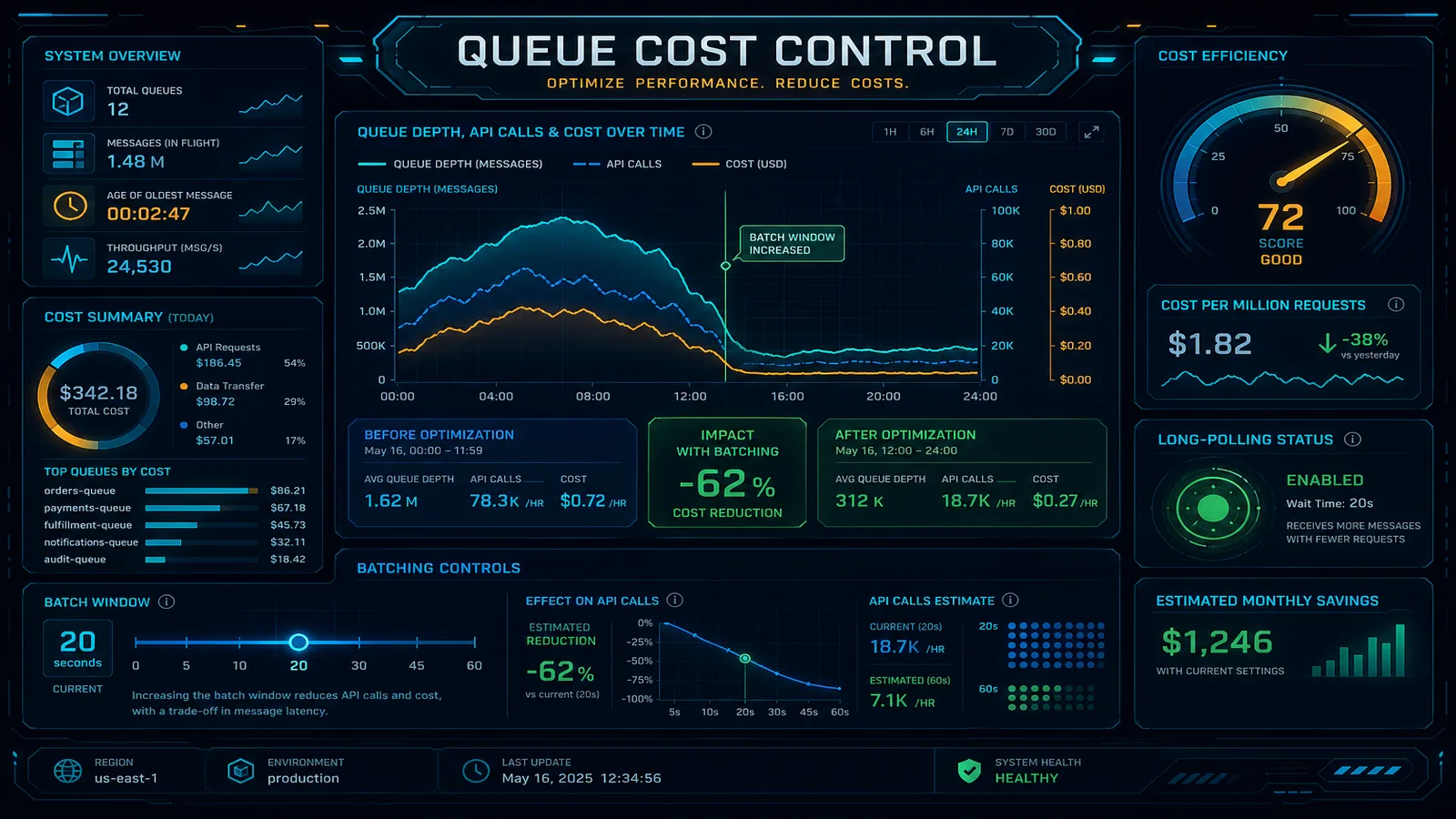
SQS is cheap until retry storms: short polling × uncapped workers. July 2026 — long poll 20s, visibility math, DLQ alarms, concurrency caps.
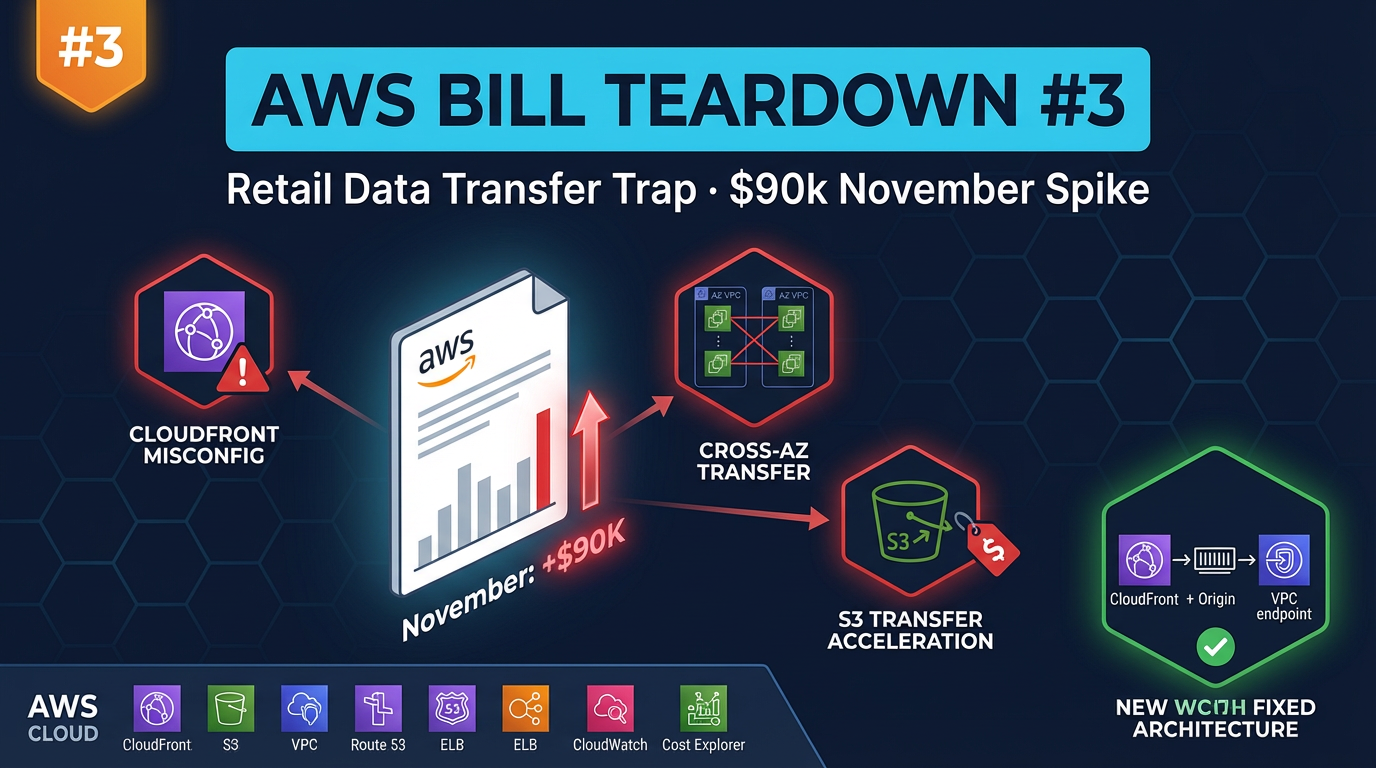
A mid-size retailer spiked to $87k in November from three data-transfer traps. July 2026 refresh — CloudFront hit-rate math, Origin Shield pricing, cross-AZ ECS, and Transfer Acceleration misuse.
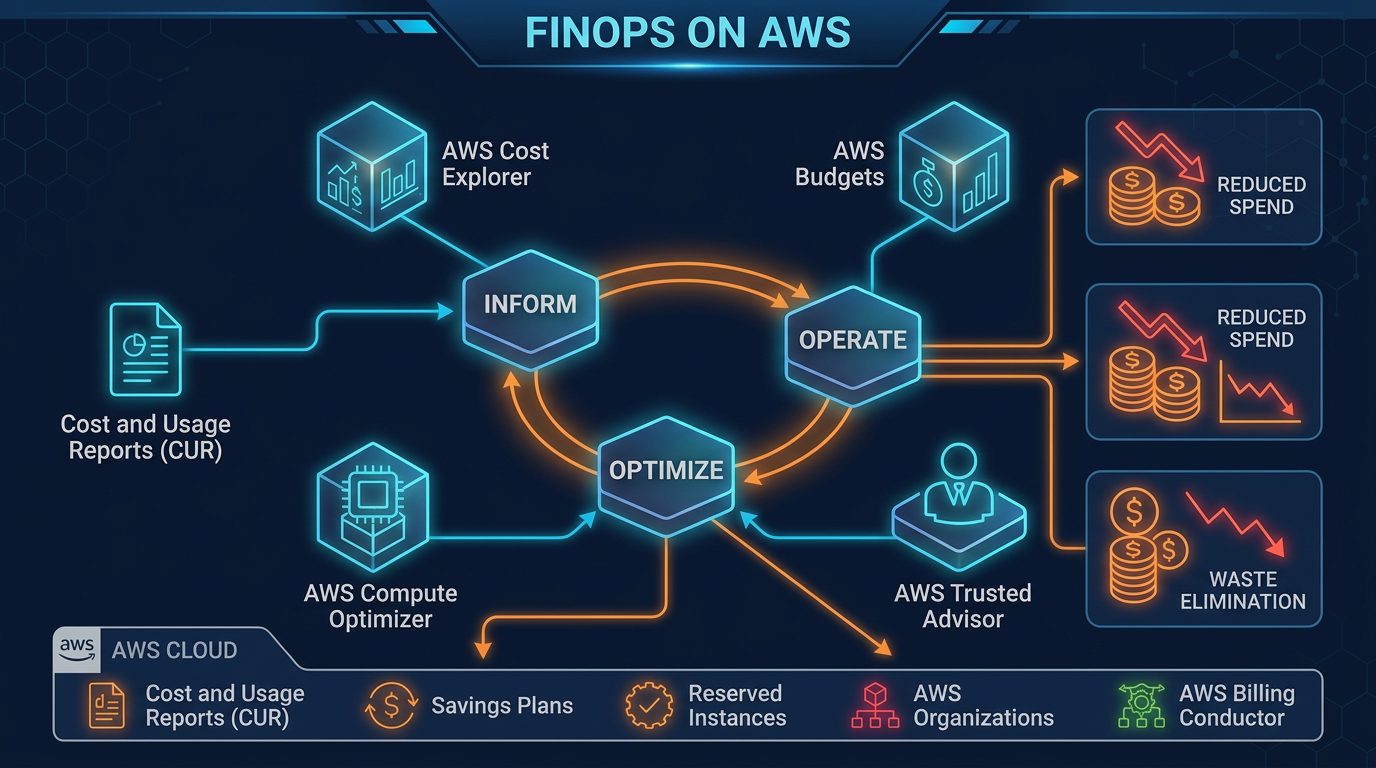
Cloud cost governance that actually sticks. A comprehensive guide to FinOps on AWS — the Inform/Optimize/Operate framework, AWS-native tools, team structure, and how to know when to hire a FinOps consultant.
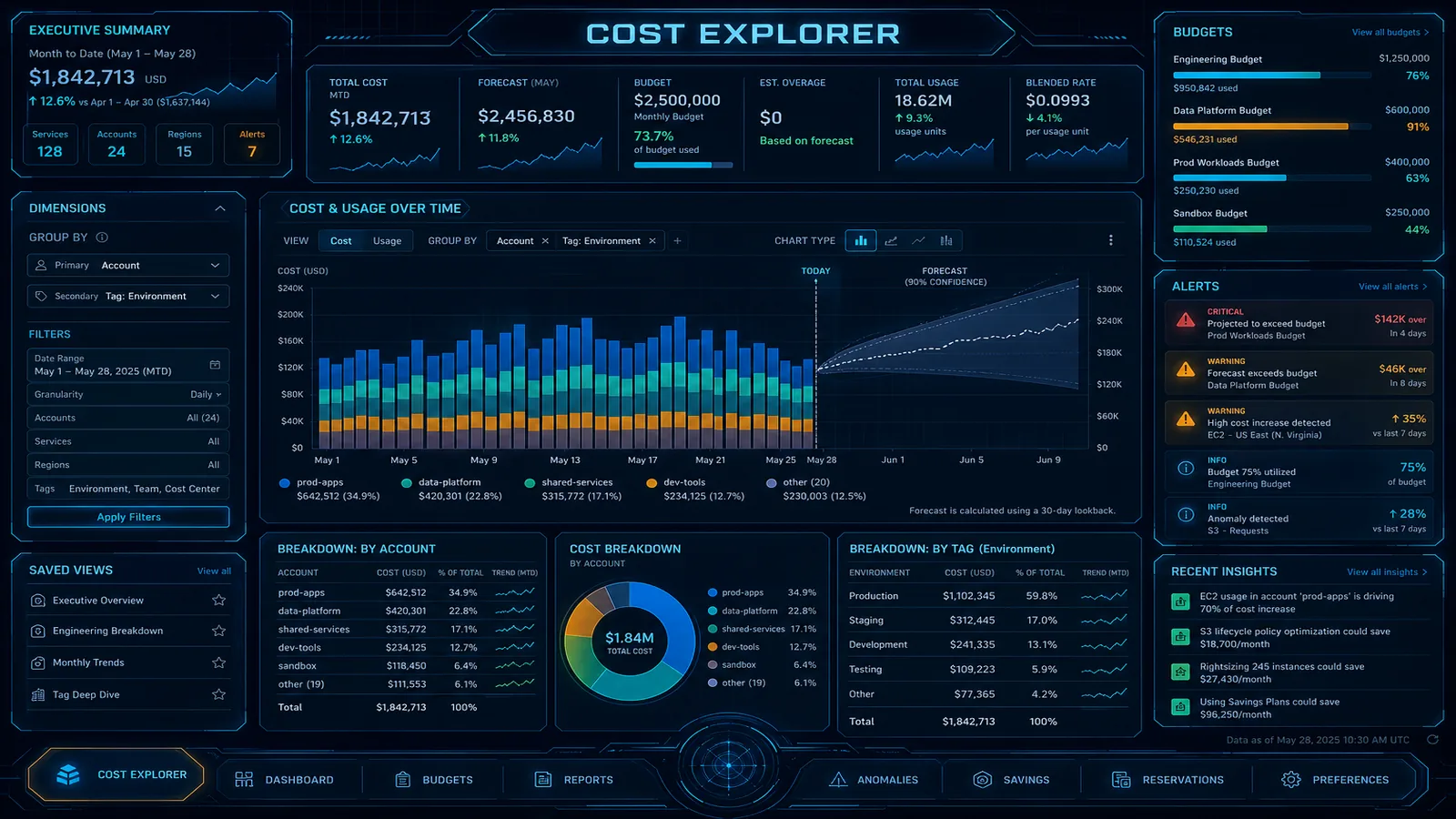
Surprise AWS bills usually come from one of a handful of sources. Cost Explorer patterns, budget alerts, anomaly detection, and the tagging discipline that turns "who owns this $4,000 spike" into a 30-second answer instead of a week-long Slack thread.
Provisioned Concurrency is still the most over-bought Lambda knob. July 2026: INIT billed since Aug 2025, SnapStart runtimes, ~$54/mo illustrative PC baseline math, Power Tuning before you buy warm capacity.
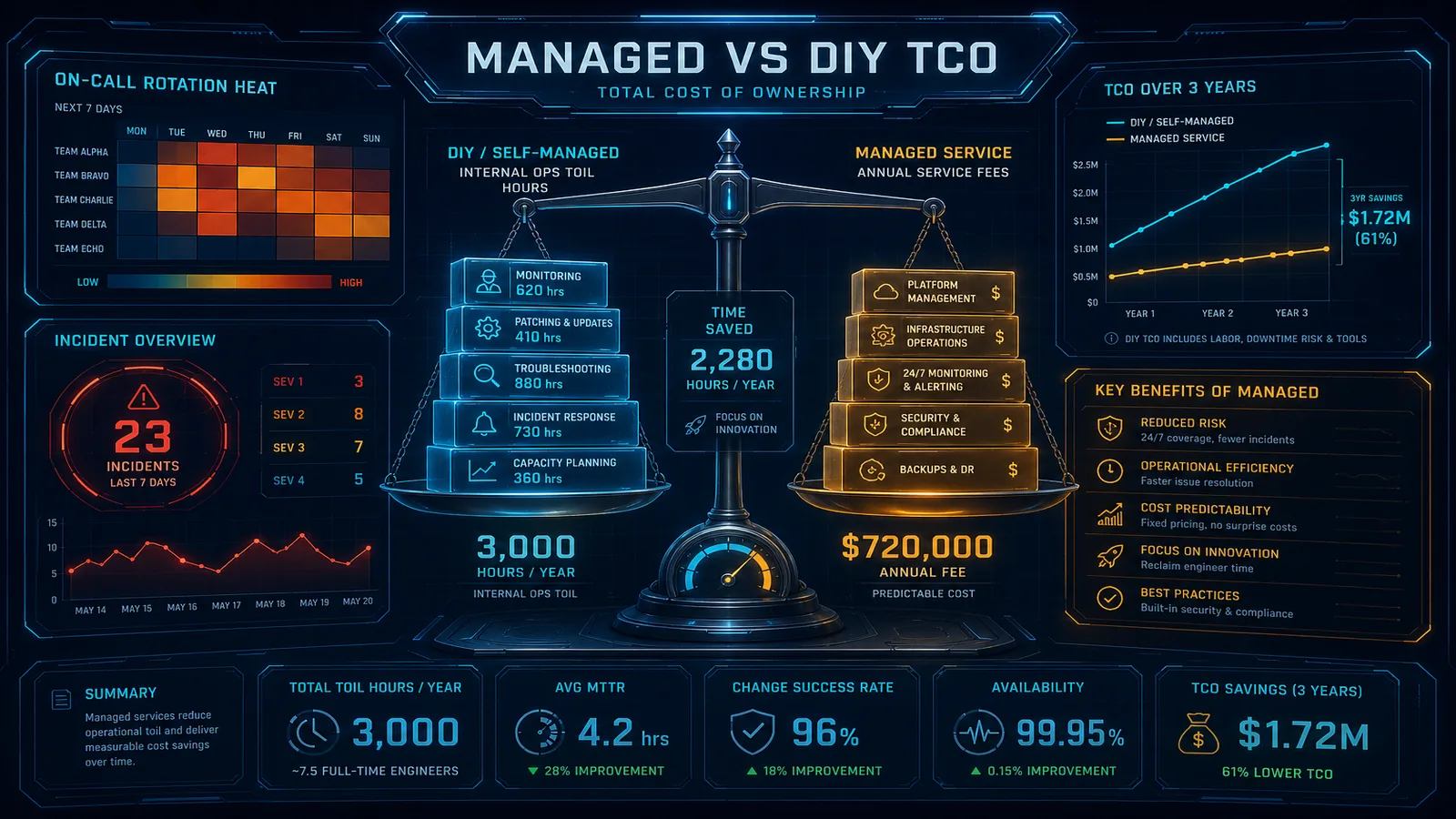
"We'll just have our developers manage AWS" still hides a $635k–$1M DIY ops band for 24/7 coverage. July 2026 TCO: staffing, tooling, GenAI ops, and Support plan choices (Business Support+ / Enterprise).
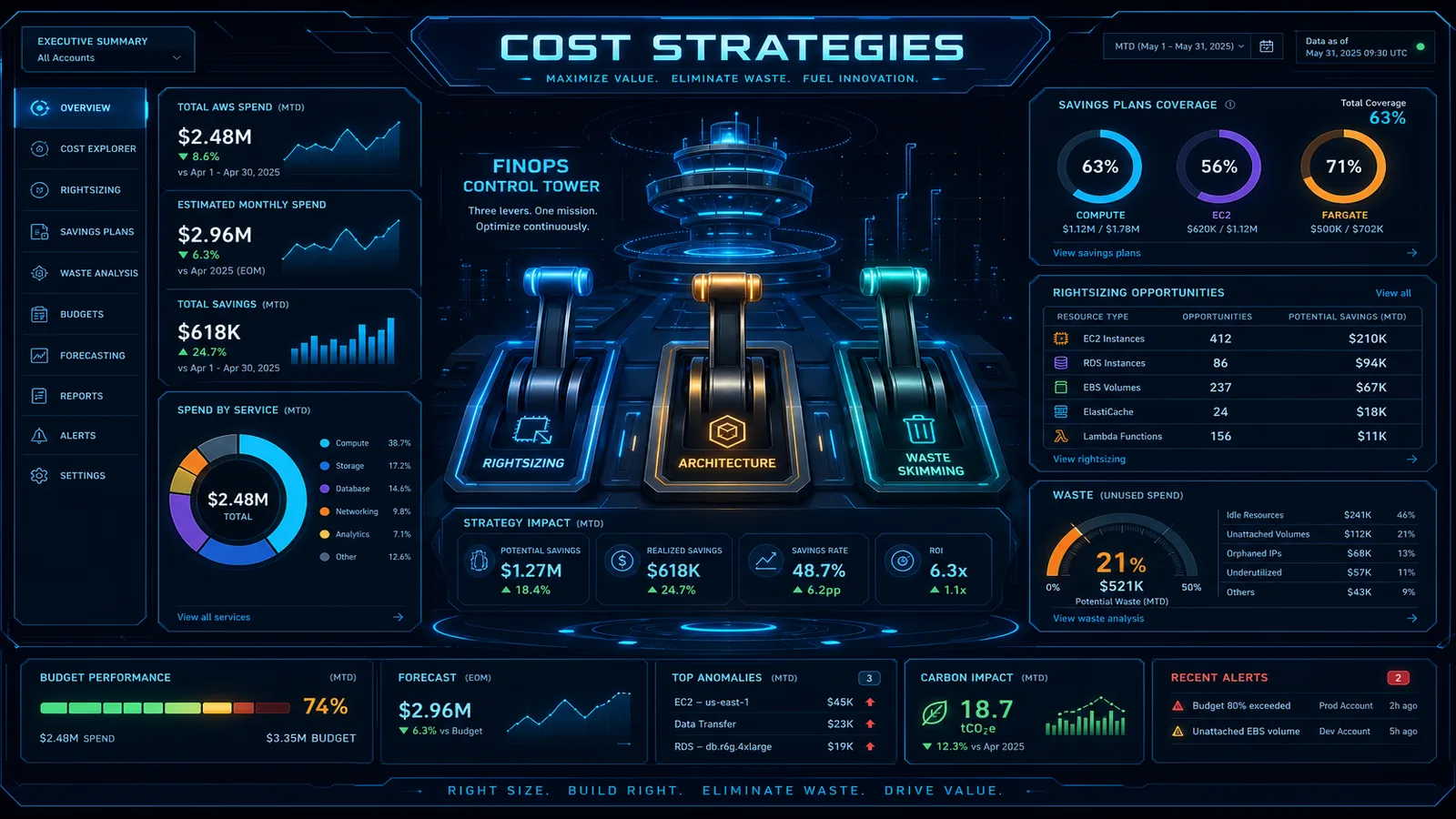
Beyond Reserved Instances — practical FinOps and AWS cost optimization strategies to reduce your AWS bill by 20-40% without sacrificing performance or reliability.